

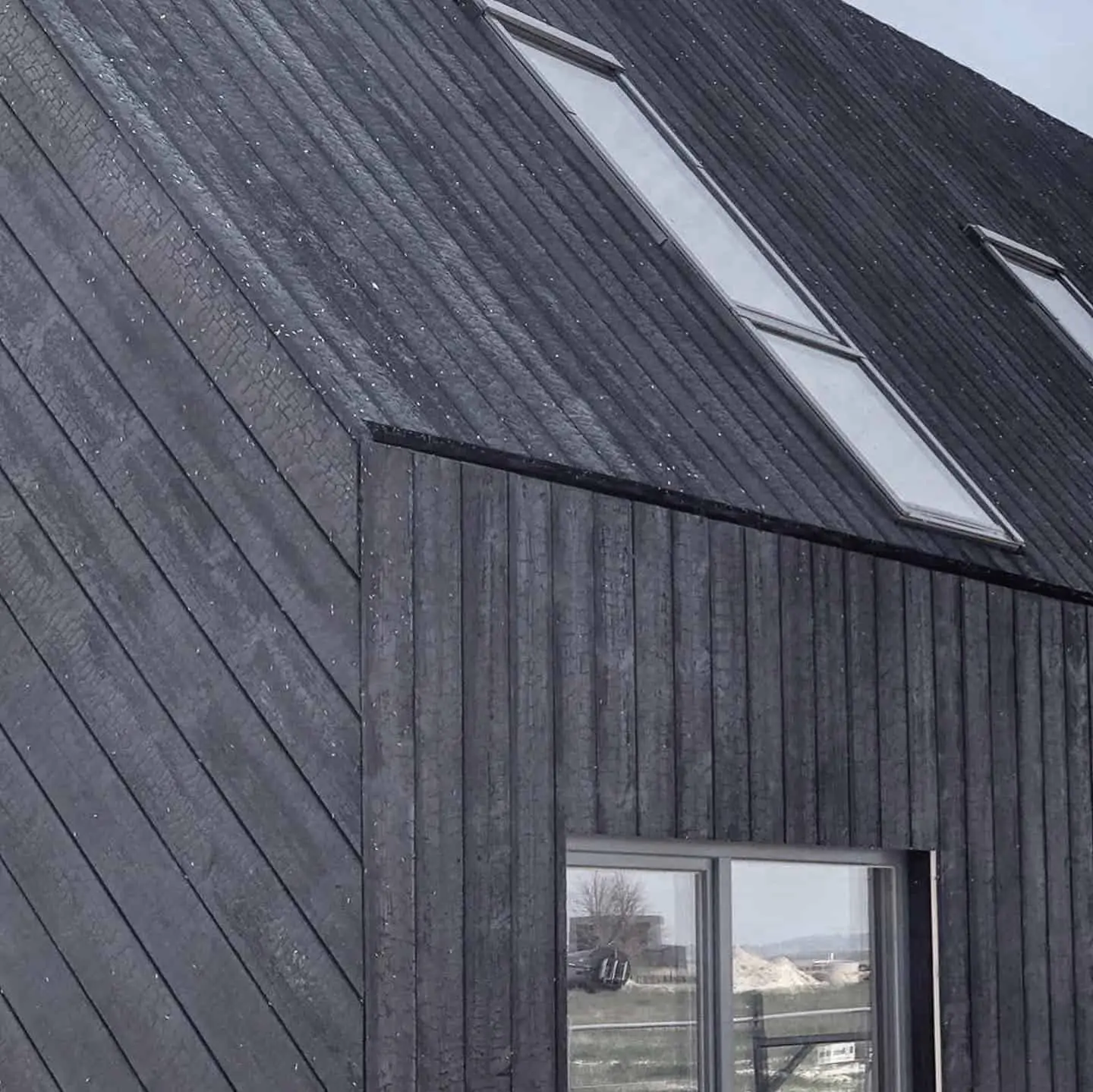
What is charred wood cladding? A UK buyer’s guide
Charred wood cladding is timber whose surface has been deliberately burnt to create a dark, textured finish. The method comes from the Japanese tradition known as yakisugi. You will also see it called shou sugi ban or burnt wood cladding.
Its appeal is easy to see. The fire brings out the grain, and every board looks slightly different. The result can suit a contemporary new build, a garden studio, a fence or a feature wall indoors.
How it is made
The timber is charred under controlled conditions. It may then be left as it is or brushed to remove some of the burnt surface. Brushed boards are usually oiled to set the colour and add surface protection.
At Kernow Cladding, that gives two broad routes:
- Carbon: burnt and left unbrushed for the deepest texture. We recommend it for vertical surfaces.
- Brushed and oiled: Black, Grey, Anthracite, Walnut, Teak and Natural. These finishes can be used on vertical and horizontal surfaces.
Which timber is it made from?
Traditional yakisugi used Japanese cedar, but the same approach works with other timbers. Our range uses spruce, larch, Accoya and thermo ash. Your choice affects appearance, performance and budget.
What to check before ordering
- Location: an exposed coastal wall asks more of a finish than a sheltered garden room.
- Orientation: decide whether the boards will be vertical or horizontal.
- Rules: check planning and building regulations for your site, particularly near a boundary.
- Maintenance: ask how often the chosen finish needs attention. Our guide to charred timber explains the differences.
- Evidence: ask for the specification and any test data your architect or building control body needs.
Next step
Request free samples, which take about 1 week to reach you, or send us your drawings and rough quantities. We can talk you through suitable timbers and finishes and prepare a quote.